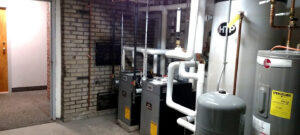
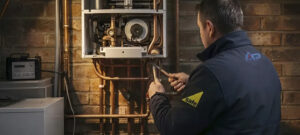
Your boiler is dripping. Alternatively, it may be completely non-functional on the coldest morning of the year. Do you call a plumber, a gas engineer, or one of the heating engineers London homeowners already trust? If you make an incorrect choice, there is a possibility of a no-show, an incomplete repair, or someone working on a gas appliance without the necessary legal authorization. Here is a quick guide to help you distinguish between the different trades, ensuring you call the right person the first time.
The Quick Answer: Who Does What
- Plumber. Handles water flow, drainage, taps, pipework, and bathroom fittings. They are not automatically qualified to work on gas appliances.
- Gas engineer. Gas Safe registered. Legally qualified to install, service or repair gas appliances such as boilers, gas fires and cookers.
- Heating engineer. Usually Gas Safe registered too, but focused specifically on central heating: boilers, radiators, controls, and increasingly heat pumps.
In practice, many good heating engineers in London hold both plumbing and Gas Safe qualifications, which is why the job titles blur on adverts and vans. What actually matters is not the title; it is the registration number behind it.
Why Gas Safe Registration Is Not Optional in London
It is a legal requirement, not a luxury to have. Anyone who installs, services, or repairs a gas boiler, gas fire, or gas cooker in a UK home must be on the Gas Safe Register, and it is a criminal offense for them to work on gas appliances if they are not. This matters more in a city like London, where older Victorian terraces, converted flats, and new-build developments all have entirely unique pipework and flue arrangements, so the margin for error is smaller.
Before anyone touches your boiler, ask for their Gas Safe ID card and check it against the free online Gas Safe Register checker. The card shows their license number and exactly which gas appliances they are qualified to work on, since not every registered engineer is signed off for every appliance type.
Real London Scenarios: Who to Actually Call
An Old Victorian Terrace in Clapham With a Boiler That Will Not Fire
This is a job for a Gas Safe registered heating engineer. Older properties often have outdated flues or undersized pipework, so a specialist who understands period housing stock matters as much as the certificate.
A New-Build Flat Near Stratford With Falling Combi Pressure
Again, this is a heating engineer’s job, since pressure loss on a sealed system usually points to a fault inside the boiler or the heating circuit rather than a general plumbing issue.
A Semi-Detached Home in Bromley Considering a Heat Pump
This situation calls for one of the heat pump installers. London homeowners can rely on MCS-certified advice, since heat pump sizing depends on insulation, radiator size, and electrical capacity, not just the boiler swap logic of a like-for-like replacement.
A Dripping Tap or a Blocked Kitchen Drain
No gas is involved here, so a general plumber is the right call, and there is no need to wait for a Gas Safe specialist.
What Heating Engineers Actually Do Day to Day
Beyond emergency call-outs, most of the work is planned. Typical jobs include annual boiler servicing, powerflushing to clear sludge from old radiators, balancing the heating system for even warmth in every room, and fitting smart thermostats. Anyone offering central heating services London -wide should be comfortable working across older gravity-fed systems and modern sealed combi setups, since London’s housing stock spans both extremes within a few streets of each other.
How to Check Someone Is Legally Allowed to Touch Your Boiler
- Ask for their Gas Safe ID card and check the photo matches.
- Look up their license number on the Gas Safe Register website to confirm it is current.
- Confirm that the appliance you need serviced, whether it is a boiler, gas fire, or cooker, is included in their qualifications, as registration does not automatically cover all types of appliances.
SMD Energy’s engineers, for example, work under Gas Safe registration number 624338 and are factory trained on the boiler brands they install, so homeowners can verify credentials before any work begins.
When One Job Needs Two Trades
Sometimes a project genuinely needs both a plumber and a heating engineer. Relocating a boiler to a new kitchen wall, for instance, involves pipework changes a plumber handles and a gas connection only a Gas Safe engineer can legally certify. A reputable heating company in London will either employ both skill sets in-house or coordinate the two trades so you are not left chasing two separate tradespeople and two separate invoices.
Why Credentials Matter More Than Convenience
It can be tempting to book whoever answers the phone fastest. But an engineer without the right registration cannot legally sign off a boiler installation, which can affect your home insurance, any warranty on the appliance, and your safety. SMD Energy has over 30 years of combined engineering experience across London, Kent, and Essex, and every engineer is Gas Safe registered before they are allowed near a customer’s boiler. You may need one of the heating engineers that London relies on for a full boiler swap, ongoing central heating services that London households book every autumn, or advice from the heat pump installers. London homeowners are increasingly turning to SMD Energy as gas boilers are phased out. You can see the full range of SMD Energy’s boiler services in London, from routine servicing to full replacements, or head back to the SMD Energy homepage to compare heating, heat pump, and air conditioning options side by side.