The way we warm our homes is changing rapidly, driven by shifting environmental policies, volatile energy markets, and significant jumps in home heating technology. For property owners across Kent, making the right choice for a new home system has become more complex than simply swapping an old boiler for a identical new model.
In 2026, the push for energy efficiency is no longer just a trend, it is a critical household priority. With the UK striving toward net-zero targets and the energy landscape evolving, choosing a new central heating installation Kent requires a strategic look at your property’s structure, your household budget, and your long-term energy goals.
This guide provides an honest, technical look at how gas systems stack up against heat pumps in 2026. We will look closely at running efficiencies, installation processes, and the practical details Kent residents must consider to find the perfect fit for their homes.
The Landscape of Home Heating in 2026
To understand your options, it helps to look at the market trends and data shaping home renovations across the UK. Property heating is a major focus for carbon reduction, as residential properties are responsible for roughly 16% of total UK greenhouse gas emissions.
The Rise of High-Efficiency Boilers
Despite the growth of renewable energy, natural gas remains the primary heating source for the vast majority of homes in Kent. Modern condensing gas boilers are incredibly refined compared to units built a decade ago.
The Momentum Behind Heat Pumps
At the same time, air source heat pumps have moved from a niche renewable option into a mainstream home solution. Backed by government initiatives like the Boiler Upgrade Scheme, which provides upfront grants to help offset equipment expenses, thousands of South East households have switched to electric-powered heating.
Traditional Gas Boilers: The Proven Standard
For many homes, sticking with a gas-powered central heating system is a practical and cost-effective choice. It offers high heat outputs and familiar controls.
Rapid Heat Delivery
Gas boilers operate as high-temperature systems, circulating water through your radiators at around 60°C to 75°C. This allows the system to warm up a chilly room in a matter of minutes, making it highly effective for properties with lower insulation levels.
Compact, Space-Saving Footprints
Modern combi and system boilers are designed to be compact. Units like the Worcester Greenstar 4000 or Vaillant ecoTEC plus are small enough to be neatly hidden inside a kitchen cupboard, making them perfect for flats, terraced houses, and homes where floor space is at a premium.
Straightforward Maintenance
Because gas technology is highly standardized, sourcing replacement components is fast and straightforward. Partnering with certified local gas central heating engineers ensures your system is installed quickly and safely.
Air Source Heat Pumps: The Renewable Frontier
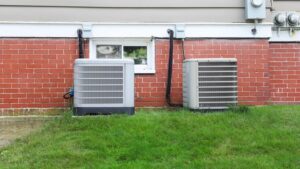
Air source heat pumps work on a completely different mechanical principle. Instead of burning fuel to create heat, they act like a refrigerator in reverse, absorbing latent heat from the outside air and compressing it to warm your home.
Unmatched Efficiency Ratios
While a top-tier gas boiler maxes out at around 94% efficiency, a heat pump operates at an astonishing 300% to 400% efficiency.
Massive Carbon Reductions
Because they run entirely on electricity, heat pumps produce zero localized carbon emissions. As the UK electrical grid incorporates more wind and solar power, running a heat pump becomes an increasingly clean way to heat your home, drastically reducing your family’s overall carbon footprint.
Low-Temperature, Continuous Comfort
Unlike gas systems, heat pumps are low-temperature systems, circulating water at a gentle 35°C to 55°C.
Crucial Decision Factors for Kent Homeowners
Choosing the right system is not just about comparing equipment specs. It depends heavily on the architectural style and layout of your specific property.
1. Your Property’s Insulation Profile
Before installing a heat pump, your home must have excellent insulation, including thick loft insulation, cavity walls, and modern double glazing.
2. Available Indoor and Outdoor Space
A gas combi boiler provides hot water instantly without needing a storage tank. A heat pump, however, requires two main components: a large outdoor fan unit placed in a garden or courtyard, and a dedicated indoor hot water cylinder to store water.
3. Upfront Budget vs. Long-Term Payback
While government grants can help lower the initial cost of a heat pump, the upfront cost for equipment, larger radiators, or underfloor heating modifications is still higher than a straightforward boiler replacement.
Trusting Local Engineering Expertise
No matter which path you choose, a professional installation requires deep technical knowledge, precise system sizing, and strict compliance with UK safety standards. Getting the wrong size system can cause components to wear out early, lead to poor heating performance, and result in sky-high energy bills.
With over 30 years of industry experience, SMD Energy provides premier heating solutions across Kent, London, and Essex. Their factory-trained, Gas Safe registered engineers and expert surveyors provide clear, honest guidance tailored to your budget and property needs.
Conclusion
There is no single “right” answer in the debate between gas engineers and heat pumps in 2026. If you own a modern, well-insulated home with ample outdoor space and want to minimize your carbon footprint, an air source heat pump is an excellent investment for the future. However, if you live in a traditional Kent property with space limitations or want to keep initial installation costs manageable, a high-efficiency condensing gas boiler remains a highly reliable and practical choice. Partnering with local experts ensures your home gets a custom solution built to perform safely and efficiently.